

Menu
F-1 and J-1 Visas: Duration of Status Ends
F-1 and J-1 Visas: Duration of Status Is Ending
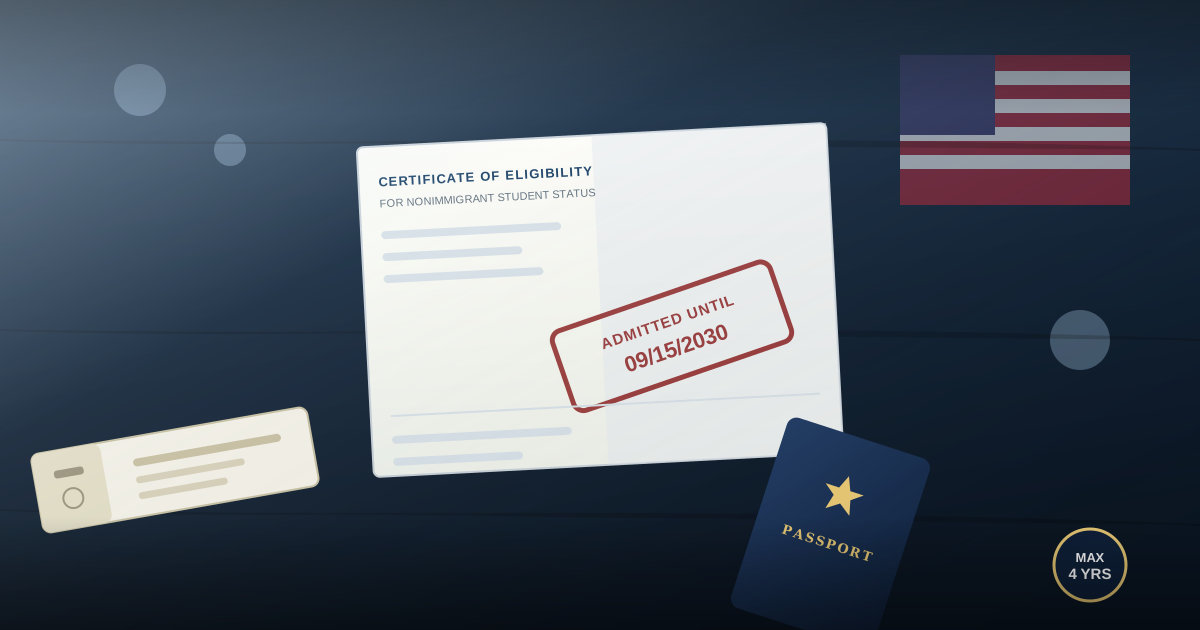
On July 17, 2026, DHS published a final rule ending one of the most fundamental features of student and exchange visitor status in the United States: "Duration of Status." Starting September 15, 2026, F-1 students, J-1 exchange visitors, and I-visa foreign media representatives will no longer be admitted for as long as their program lasts. Instead, they will be admitted only until a fixed date — and staying past it without taking action will put them out of status.
What "Duration of Status" Was
For decades, F-1 and J-1 nonimmigrants were admitted under a system called "Duration of Status," or D/S. Instead of a fixed expiration date, your authorized stay simply lasted as long as you were maintaining your program — enrolled full-time, in good academic standing, or actively participating in your exchange program. There was no countdown on your I-94 to track.
That flexibility is gone under the new rule.
The New Fixed Period of Admission
Effective September 15, 2026, F and J nonimmigrants will be admitted only until the program end date listed on their Form I-20 (F-1) or DS-2019 (J-1) — with a hard cap of four years, even if the underlying program is longer. That end date will appear directly on your I-94 arrival record, the same way it already does for most other nonimmigrant categories.
If your program will run longer than your admitted period, you cannot simply keep going under the old assumption that your status covers you. You will need to affirmatively request more time before your admitted period runs out.
Grace Period Is Shrinking Too
- F-1 students: the post-program grace period drops from 60 days to 30 days for anyone who enters or reenters the U.S. on or after September 15, 2026.
- J-1 exchange visitors: the grace period remains 30 days, unchanged by this rule.
A shorter grace period means less runway to depart, transfer schools, change status, or start authorized post-completion work after your program ends.
Who Is Affected First
This is the detail causing the most confusion, so it is worth being precise:
- If you are already in the U.S. on F-1 or J-1 status and you do not travel internationally, you keep your current 60-day (F-1) or 30-day (J-1) grace period for now, even after the rule takes effect.
- If you depart and reenter the U.S. on or after September 15, 2026, you are immediately moved onto the new system: a fixed admitted-until date on your I-94, and the shorter 30-day grace period if you are an F-1 student.
In practice, this means international travel — even a short trip home — can change the rules that apply to your stay. That is a major shift from how D/S worked, and it is easy to overlook when planning a trip abroad.
Needing More Time: The New Form I-539 Requirement
Under D/S, extensions were largely automatic as long as you were still validly enrolled or participating in your program. Under the new rule, if you need time beyond your admitted-until date — for any reason, including:
- Extending your academic program
- Transferring schools
- Moving to a new academic level (e.g., bachelor's to master's)
- Starting post-completion Optional Practical Training or Academic Training
— you must timely file a complete Form I-539 extension of stay application with USCIS before your admitted-until date expires. That means a filing fee, biometrics, and the possibility of an interview, where none of that was previously required to simply continue a program in good standing.
Who This Affects
- F-1 students, including those on post-completion OPT or STEM OPT extensions
- J-1 exchange visitors and scholars, including researchers, professors, and interns
- I-visa holders — representatives of foreign information media
- Designated School Officials and Responsible Officers at universities and exchange programs, who will need to track fixed admission dates for every student and scholar rather than relying on continued enrollment
What to Do Now
- Check your program end date on your I-20 or DS-2019 and understand what admitted-until date you are likely to receive going forward.
- Think twice before international travel close to September 15, 2026 if you are relying on the longer 60-day F-1 grace period — reentry after that date resets you onto the new rules immediately.
- Build in lead time for extensions. If your program will run past your admitted period, plan to file Form I-539 well before your admitted-until date, not after.
- Talk to your school's international student office about how they are tracking the new fixed dates, but don't rely on that alone if your situation is complicated — dual enrollment, program changes, or prior status issues can all complicate an extension filing.
- If you are close to completing your program or starting OPT/Academic Training, confirm how the shorter grace period affects your timeline for next steps.
Why Work With an Immigration Attorney
This rule replaces one of the most forgiving features of student and exchange visitor status with a hard deadline and an affirmative filing requirement. Missing an admitted-until date, or filing an extension late or incorrectly, can mean falling out of status — a very different problem than simply needing to update paperwork.
At Ragheb Immigration Law, we help students, scholars, and exchange visitors throughout Tampa Bay understand exactly where they stand under the new rule and file extensions correctly and on time.
Questions About Your Status Under the New Rule?
If you are an F-1 or J-1 visa holder trying to figure out your admitted-until date, your grace period, or whether you need to file an extension, contact our office for a consultation before your timeline runs out.
Tags
- F-1 Visa
- J-1 Visa
- Duration of Status
- Student Visa Rule Change
- Form I-539
- Tampa Immigration Lawyer