

Menu
The 2022 Public Charge Rule Is Gone - What the New September 18, 2026 Rule Means for Your Green Card
The 2022 Public Charge Rule Is Gone: What the New September 18, 2026 Rule Means for Your Green Card
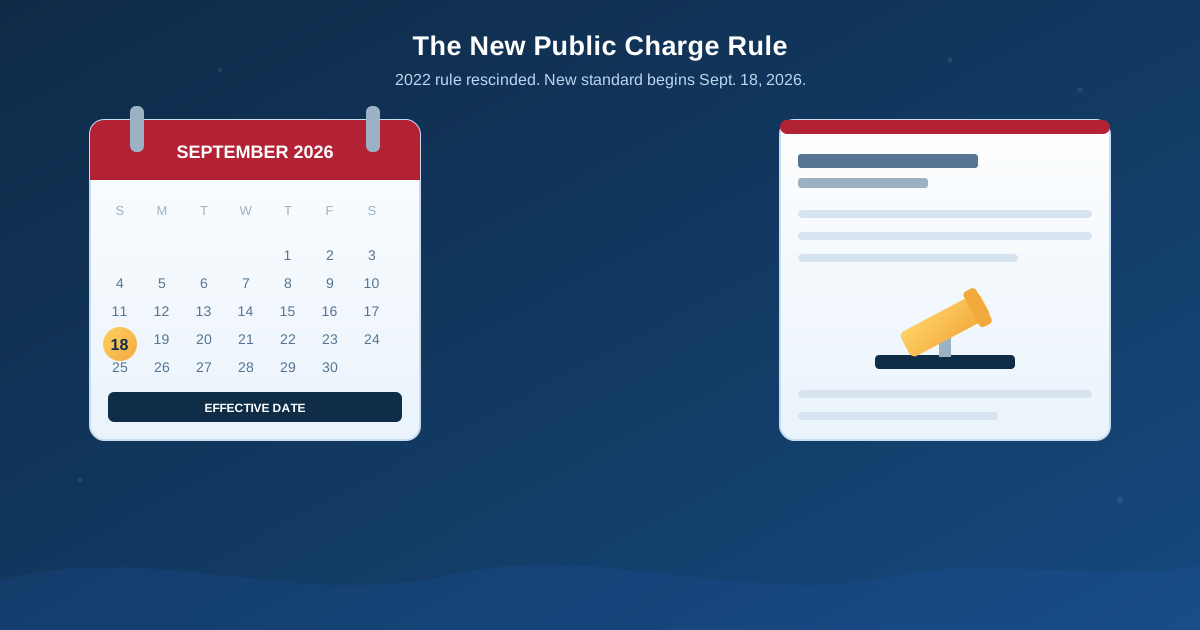
On July 16, 2026, the Department of Homeland Security finalized a rule rescinding the 2022 public charge regulation and replacing it with a far broader, more discretionary framework. The rule was published in the Federal Register on July 20, 2026, and takes effect September 18, 2026. If you are planning to file for a green card, sponsor a family member, or adjust status anytime this year, this is one of the most consequential immigration policy changes of 2026 — and it has nothing to do with removal or deportation proceedings.
What Actually Changed
The 2022 rule, which has governed USCIS public charge decisions for the past several years, was narrow by design. It only counted an applicant as a likely "public charge" if they were expected to become primarily dependent on the government through cash assistance for income maintenance or long-term institutionalization at government expense. Non-cash benefits — Medicaid, food assistance, housing aid — were explicitly excluded from consideration.
The new rule removes those limits. Starting September 18, 2026, USCIS officers will go back to a case-by-case, "totality of the circumstances" analysis with substantially more discretion to weigh an applicant's overall self-sufficiency, not just a narrow set of cash-benefit programs.
Benefits That Now Count Against You
Under the new framework, USCIS officers may consider an applicant's past and potential future use of:
- Most forms of Medicaid (limited exceptions remain for emergency medical care and certain pregnancy- and child-related services)
- SNAP (food stamps)
- Housing assistance, including Section 8 Housing Choice Vouchers and project-based rental assistance
These programs were off-limits under the 2022 rule. They are back in play now, alongside the traditional factors: age, health, family size, education and skills, and financial resources.
A New Form I-485 Is Coming
USCIS will publish a revised Form I-485, Application to Register Permanent Residence or Adjust Status, tied to this rule. Older versions of the form that are postmarked or filed electronically on or after September 18, 2026 will not be accepted. If your adjustment of status package is close to ready, confirm you are using the correct, current edition of the form before you file — this is an easy way for an otherwise strong case to get rejected on a technicality.
Who This Affects
This rule reaches nearly every green card path that runs through USCIS, including:
- Family-based and marriage-based adjustment of status applicants filing Form I-485 domestically
- Employment-based adjustment of status applicants
- Anyone whose household includes members currently receiving Medicaid, SNAP, or housing assistance
- Petitioners preparing an I-864 Affidavit of Support, which remains the primary tool for demonstrating self-sufficiency
It is worth noting this final rule addresses the domestic, USCIS-side standard specifically. Consular processing abroad has been operating under its own updated State Department guidance for some time — the gap between the two is narrowing now that USCIS discretion is expanding, but the two processes are still governed by separate guidance documents.
What to Do Before September 18, 2026
- If you can file before the effective date, talk to an attorney about the timing now. Cases postmarked or e-filed before September 18 are still evaluated under the 2022 rule.
- Take an honest inventory of benefits usage in your household. Know which programs you or your intending immigrant have used, and when, so there are no surprises at the interview.
- Start building a stronger Affidavit of Support now. Income documentation, joint sponsors, and evidence of assets all carry more weight under a discretionary standard than they did under the narrower 2022 rule.
- Watch for the updated Form I-485. Filing on an outdated form after the effective date will result in rejection, not just delay.
- Do not panic-drop benefits your household is legally entitled to before fully understanding the rule. Abruptly losing needed benefits can create other hardships without necessarily helping your case — talk to an attorney before making that decision.
Why Work With an Immigration Attorney Right Now
Rule changes like this create a short window where timing decisions can meaningfully affect the outcome of a case. Whether it makes sense to file now under the current rule, wait and build a stronger record, or restructure a household's public benefits situation before applying all depends on the specific facts of your case.
At Ragheb Immigration Law, we help clients throughout Tampa Bay evaluate how this rule change affects their specific green card strategy — before they file, not after a denial.
Talk to Us Before September 18
If you have a green card or adjustment of status case in progress, or you are planning to file in the coming months, do not wait to find out how this rule applies to you. Contact our office for a consultation so we can help you plan around the effective date with clear eyes.
Tags
- Public Charge 2026
- Green Card Rule Change
- Affidavit of Support
- Adjustment of Status
- Form I-485
- Family Immigration
- Tampa Immigration Lawyer